
How to Uncover Pressure Within Retaining Walls for Rainstorms
Introduction: February can make a yard feel like it has a mind of its own. One week, it is dry enough to sweep the walkway, then a stretch of rain shows up, and suddenly, a retaining wall looks damp, stained, or even a little “sweaty.” Homeowners often assume the wall itself is the problem, but most of the story is happening behind it. If a wet wall is showing up this month, the right kind of drainage can take a lot of stress off the structure and help it last longer, so keep reading.
Retaining Walls And The Real Reason A Wall Stays Wet In February
Drainage And The Hidden Water Pocket
A “wet wall” usually means water is collecting where it should not, which is the soil directly behind retaining walls. In February, that soil can stay saturated longer because cooler air and shorter days slow down evaporation. If the backfill is packed with heavy clay or the wall is built without a good path for water to exit, moisture builds up and pushes forward. That trapped water can also wick through certain materials, appearing as damp areas on the wall's surface.
It also helps to remember that water does not always come from rain falling in one spot. Roof runoff, downspouts that end near the slope, and a low area in the yard can all feed the space behind retaining walls. Sometimes the wall looks wet only in one section, which can point to a single nearby source rather than a full-yard issue.
Hardscaping Surfaces That Send Water Down
Many homeowners do not connect hardscaping to a wet retaining wall, but paved surfaces can significantly change how water behaves. When rain hits soil, some of it soaks in right where it falls. When rain hits pavers, concrete, or a compacted path, it moves across the surface, gathers speed, and then heads to the lowest point. If that low point happens to be the top edge of retaining walls, the backfill gets fed again and again during every storm.
Patios can be part of this story too, especially when they were installed long before the wall, or when settling has changed the slope. If a patio pitches toward the wall instead of away from it, water can follow that line and collect behind the structure. A well-planned hardscaping layout ensures water flows in a clear direction and has a safe landing area, so it does not keep dumping into the same section of the wall. That is why a wet retaining wall often points to a bigger grading and surface-water picture, not only the wall materials.
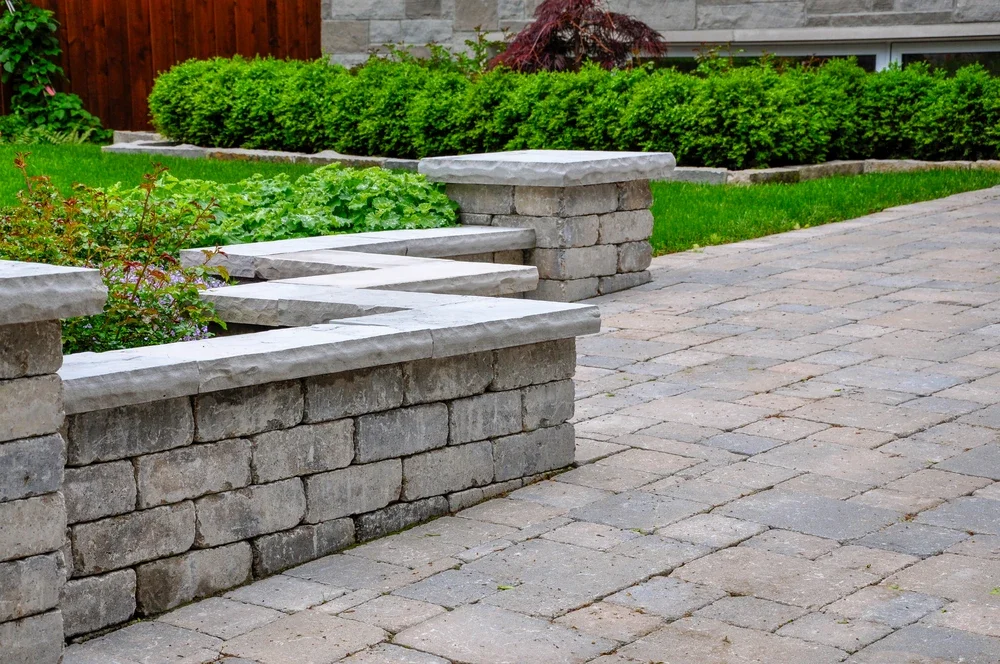
Retaining Walls Need Pressure Relief Before Winter Cracks Show Up
Drainage Layers That Let Water Move
The big issue behind wet retaining walls is hydrostatic pressure, which is a fancy way of saying water pushing where it is trapped. Water is heavy, and when it piles up behind a wall, that weight presses forward on every part of the structure. Over time, pressure can show up as bulging, shifting, or cracking, especially after repeated wet spells in winter. The goal is not to keep all water away, because that is unrealistic. The real goal is to give water an easy route out, so it does not sit there building force.
This is where good drainage design matters, and it usually involves more than one element working together. Gravel backfill creates open space so water can flow rather than getting stuck in dense soil. A perforated drain pipe at the base can carry that water away to a safe exit point, and filter fabric can help keep soil from clogging the system. In some yards, French drains are also used nearby to intercept water before it ever reaches the wall area, which can be a huge help on properties that collect runoff from higher ground. When drainage is planned from the start, retaining walls tend to stay cleaner, drier, and far less stressed after stormy weeks.
Hardscaping Tips: Preventing Retaining Wall Footing Erosion
The base of retaining walls is often where problems start, because that is where water wants to settle. If the bottom course is sitting in soggy soil for long periods, materials can stain, mortar can weaken, and freeze-thaw cycles can chip surfaces in colder snaps. Even in Texas, a chilly night after rain can make the top layer of saturated soil expand and contract, and the wall feels that movement. This is one reason experienced craftsmanship matters, because the base preparation is not the place to rush. It needs proper compaction, a reliable drainage route, and proper grading so water does not pond against the footing.
Hardscaping can support this in practical ways when it is designed with runoff in mind. A walkway edge, a border, or a nearby paved area should guide water away from the wall instead of funneling it toward the backfill. Retaining walls work best when the wall structure and the nearby hardscaping work as a team, not as separate projects that never speak to each other.
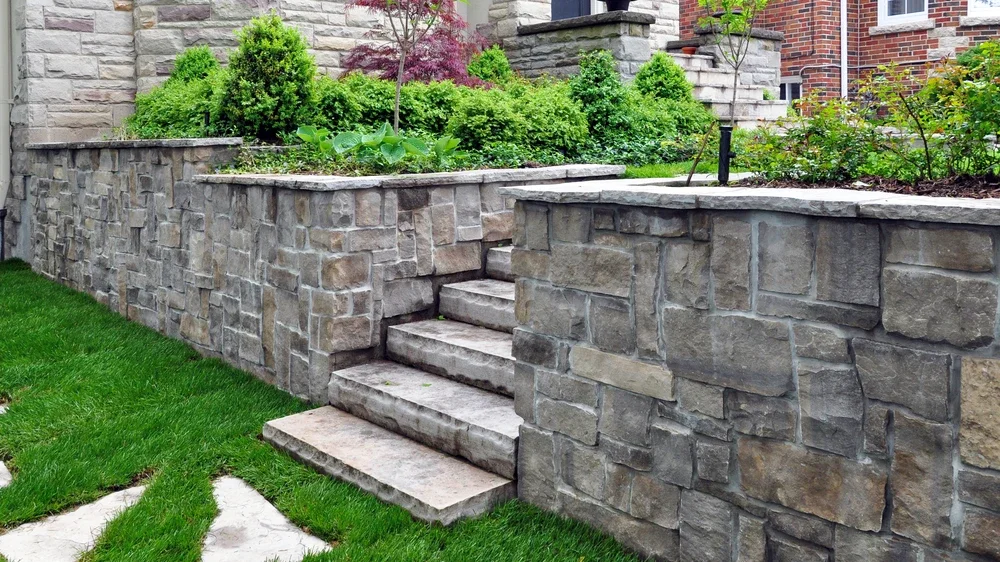
Retaining Walls After Heavy Rain: What To Check In February
Drainage Warning Red Flags Homeowners Will Miss
Some warning signs are apparent, such as a visible crack, a section that appears to be pushing outward, or blocks that no longer line up. Others are easy to ignore in February because homeowners assume it is “just winter moisture.” White, chalky staining called efflorescence can appear when water brings salts to the surface, often indicating moisture is traveling through the wall. Mud collecting near weep holes, moss, and dark staining can also point to water sitting behind retaining walls longer than it should. When those signs are paired with soggy soil along the top edge, it is smart to take it seriously.
A homeowner does not need to panic, but they also should not wait too long to address them. Drainage issues usually get more expensive when ignored, because pressure keeps working on the structure whenever the yard gets soaked again. A new roof line, a downspout extension that got knocked loose, or settling near the wall can shift where runoff ends up. When those changes occur, retaining walls that were once fine can suddenly develop damp patches in the same spot after every storm.
Hardscaping Repairs That Stop Repeat Problems
Fixing the symptom without fixing the cause is where homeowners get frustrated. They clean the wall, it looks better, and then the next rainy week, the same wet area returns. Real repairs often focus on where water is coming from and where it is supposed to go, which can include adjusting grade, adding or clearing drainage routes, or rebuilding a section of backfill correctly. If the issue is runoff from a paved surface, the hardscaping may need a slight change in slope so water runs away from the wall rather than toward it.
In more stubborn cases, contractors may need to open the area behind retaining walls to replace clogged gravel, install a proper drainpipe, or add a second line of defense, such as French drains, in the right spot. Once the water path is corrected, the wall face usually dries more consistently, stains slow down, and the structure feels more stable.
Conclusion
A wet-looking retaining wall in February is usually a sign that water is gathering behind it, and that the pressure is not helping any structure stay strong. If a homeowner is seeing the same damp spots, staining, or soft ground near the wall, it is worth getting it checked before the next stretch of rain. We at Southern Love Landscaping & Design bring experienced craftsmanship, tailored services, and outstanding customer care to every project, including drainage solutions that protect retaining walls in the long term. Contact us when you are ready, and we will help you figure out what is happening behind the wall and what will make it right.